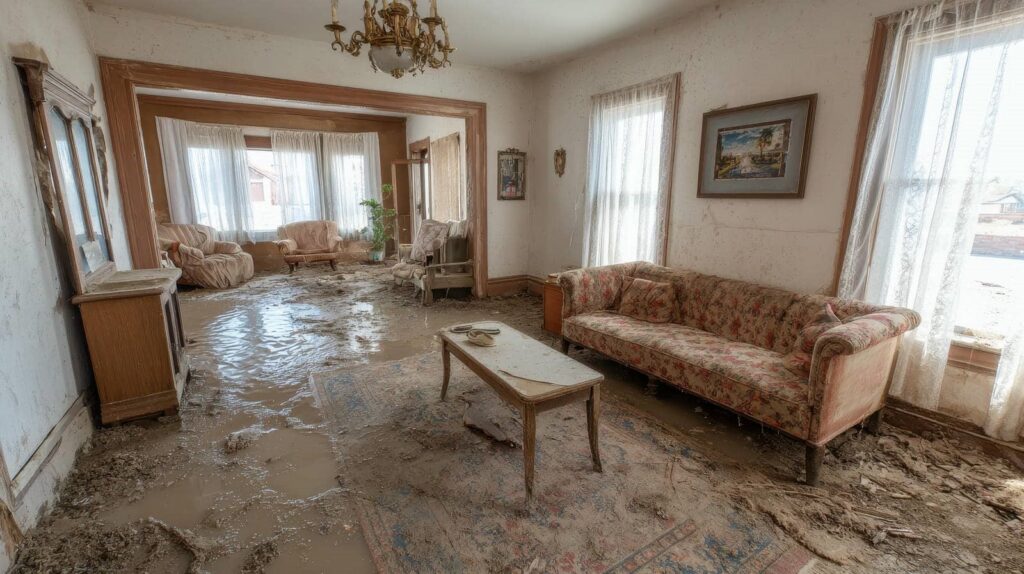
When faced with flood damage, it’s important to act methodically and safely. You need to assess the situation before diving into cleanup. Gathering the right tools is essential for effective restoration. Understanding safety precautions will protect you during the process. As you proceed, prioritizing water removal and preventing mold growth is critical. The steps you take now will directly impact your home’s recovery. Let’s explore how to tackle each phase systematically.
Key Takeaways
- Assess the extent of flood damage by inspecting structural elements, flooring, and personal belongings, documenting everything for insurance purposes.
- Gather essential tools like wet/dry vacuums, dehumidifiers, and protective gear to ensure safe and effective restoration.
- Start water removal using a sump pump for large areas and a wet/dry vacuum for smaller spaces, monitoring progress closely.
- Implement mold prevention techniques by increasing ventilation, using dehumidifiers, and disposing of soaked materials promptly within 48 hours.
- Clean and disinfect affected areas with appropriate mixtures, ensuring to follow safety guidelines and manufacturer’s instructions for effective results.
Introduction: Understanding Flood Damage and Its Impact
When a flood strikes, the damage can be both immediate and far-reaching, affecting not just your property but also your health and safety. Understanding the specific risks floodwaters pose is vital for effective emergency preparedness.
It’s essential to have flood insurance in place, as it protects against costly repairs and potential loss of belongings. Evaluating your home’s vulnerability to flooding can help you identify necessary precautions, such as elevating electrical systems and installing sump pumps.
Being well-prepared means you’ll know how to respond quickly, minimizing damage and ensuring your family’s safety. Remember, when you’re part of a community that values preparedness, you’re not just protecting yourself; you’re also helping others during a challenging time.
How to Assess Flood Damage Effectively
Evaluating flood damage effectively requires a systematic approach to guarantee no detail is overlooked. Start by gathering necessary documentation, including your flood insurance policy, to understand coverage limits.
Follow these steps for a thorough damage assessment:
- Inspect structural elements like walls and foundations for cracks or warping.
- Assess flooring materials, checking for swelling or discoloration.
- Evaluate personal belongings, noting any items that are beyond repair.
- Take photographs to document damage for your insurance claim.
Make certain to prioritize safety throughout the process. If electrical systems or major structures are compromised, consult professionals before proceeding.
A meticulous assessment not only aids insurance claims but also guarantees you tackle restoration efficiently, leading to a more secure and comfortable living space.
Must-Have Tools for Flood Restoration
To effectively restore your space after a flood, you’ll need specific tools tailored for the task.
Essential cleaning equipment, proper safety gear, and efficient water extraction tools are critical for thorough remediation.
Let’s break down each category to guarantee you’re fully equipped for the restoration process.
Essential Cleaning Equipment
Having the right tools is vital for effective flood damage restoration. You’ll need to focus on necessary cleaning equipment that can handle the job efficiently.
Proper equipment maintenance is critical to guarantee functionality and longevity. Here’s a list of must-have tools:
- Wet/Dry Vacuum: Perfect for extracting water from carpets and hard surfaces.
- Mold Remover: Essential for preventing mold growth after flooding.
- Heavy-Duty Dehumidifier: Helps to dry out the air and surfaces, reducing moisture levels.
- Protective Gloves and Masks: Keeps you safe from hazardous materials during cleanup.
Investing in these tools not only aids in effective restoration but also fosters a sense of belonging to a community that values preparedness and resilience.
Safety Gear Necessities
When tackling flood damage restoration, safety gear is non-negotiable. You’ll need to equip yourself with essential protective equipment to guarantee your safety.
Start with waterproof boots, which will keep your feet dry and protected from hazardous materials. Next, invest in gloves made from durable, chemical-resistant materials to shield your hands while handling contaminated items.
A good-quality respirator is vital for filtering out harmful airborne particles, especially in mold-prone environments. Don’t forget safety goggles to protect your eyes from debris and contaminants.
Finally, wear a hard hat if you’re working in areas with potential structural instability. By prioritizing safety gear, you not only protect yourself but also demonstrate a commitment to responsible restoration practices within your community.
Water Extraction Tools
After guaranteeing your safety with the right gear, the next step in flood damage restoration involves effective water extraction.
To achieve efficient water removal, you’ll need the right tools. Here’s a list of must-have equipment:
- Submersible Pumps: Perfect for removing standing water quickly.
- Wet/Dry Vacuum: Ideal for tackling smaller amounts of water and debris.
- Water Extraction Mats: Help extract water from carpets and flooring.
- Dehumidifiers: Essential for drying the area and preventing mold growth.
Don’t forget about regular equipment maintenance to guarantee peak performance during the extraction process.
Keeping your tools in top shape not only enhances efficiency but also prolongs their lifespan, making your restoration efforts smoother and more effective.
What Safety Precautions Should You Take Before Cleanup?
Before you start cleanup, it’s essential to prioritize your safety.
Wear protective gear like gloves, masks, and boots to shield yourself from contaminants.
Additionally, assess electrical hazards and ventilate the affected areas to minimize risks associated with mold and toxic fumes.
Wear Protective Gear
Protective gear is essential for guaranteeing your safety during flood damage cleanup. By wearing the right equipment, you can minimize the risk of injury and exposure to harmful contaminants.
Here’s what you should wear:
Protective gloves: These safeguard your hands from sharp objects and hazardous substances.
Safety goggles: They protect your eyes from debris and chemicals that may splash.
Dust mask or respirator: This helps filter out harmful particles and mold spores in the air.
Sturdy boots: Waterproof boots will keep your feet dry and shield them from punctures.
Before diving into cleanup, guarantee you wear this gear.
It’s not just about protection; it’s about taking responsibility for your safety and well-being.
Assess Electrical Hazards
Wearing protective gear is only the first step in ensuring your safety during flood damage cleanup.
Before you begin, assess potential electrical hazards. First, turn off the main power supply to prevent electrical shock. Inspect the area for standing water and submerged electrical appliances or outlets, as these can cause circuit damage.
Use a voltage tester to check if any live wires are present before touching anything. If you notice frayed wires or damaged outlets, avoid the area and consult a professional electrician.
Always assume that any electrical device in contact with water is hazardous. By taking these precautions, you’re protecting yourself and your home from serious risks during the restoration process.
Safety should always be your top priority.
Ventilate Affected Areas
Ventilating affected areas is crucial for effective flood damage restoration, as it helps reduce moisture and prevent mold growth.
To guarantee proper air circulation and moisture control during the cleanup process, follow these safety precautions:
- Open windows and doors to create cross-ventilation.
- Use fans to enhance air movement and speed up drying.
- Wear a mask to avoid inhaling mold spores or dust.
- Monitor humidity levels with a hygrometer to guarantee effective drying.
Step-by-Step Guide to Water Removal
Removing water from a flooded area requires a systematic approach to guarantee thorough extraction and prevent further damage.
Begin by evaluating the extent of the flooding and gather necessary tools. Utilize effective water removal techniques, such as a wet/dry vacuum for small areas. For larger volumes, consider sump pump installation to expedite the process. Make sure the pump is positioned at the lowest point of the affected area for maximum efficiency.
Once you’ve removed standing water, focus on extracting moisture from materials using fans and dehumidifiers. Monitor the drying process closely to confirm you’ve eliminated excess moisture.
How to Prevent Mold While Drying Your Home
While drying your home, it’s crucial to take proactive steps to prevent mold growth, which can develop within 24 to 48 hours in damp environments.
To effectively employ mold prevention techniques, you should consider the following drying methods:
Increase Air Circulation: Use fans and open windows to enhance airflow.
Control Humidity Levels: Utilize dehumidifiers to maintain humidity below 60%.
Remove Wet Materials: Quickly dispose of soaked carpets, drywall, or insulation.
Inspect Hidden Areas: Check behind walls and under floors for trapped moisture.
Cleaning and Disinfecting Affected Areas
Once you’ve addressed the immediate moisture issues, it’s vital to clean and disinfect the affected areas thoroughly to prevent further complications.
Start by using effective cleaning techniques, like scrubbing surfaces with a mixture of water and a mild detergent. Focus on all porous and non-porous materials.
After cleaning, apply suitable disinfecting solutions, such as a bleach-water mixture or a commercial disinfectant, to eliminate pathogens. Make sure you follow the manufacturer’s instructions for dilution and application.
Don’t forget to wear protective gear, including gloves and masks, to safeguard yourself.
Allow surfaces to air dry completely, as proper drying is important for effective disinfection.
Repairing Damaged Structures
After you’ve thoroughly cleaned and disinfected the affected areas, it’s crucial to assess and repair any damaged structures to restore your home’s integrity.
Start by evaluating the extent of the damage, focusing on critical areas such as beams, walls, and flooring.
Consider these steps for effective repairs:
- Inspect for mold and structural weaknesses.
- Choose appropriate materials for repairs, ensuring they match the original’s strength and durability.
- Reinforce weakened beams and supports to maintain structural integrity.
- Seal any gaps to prevent future water intrusion.
How to Prevent Future Flood Damage in Your Home?
Restoring your home’s structural integrity is just one part of the flood damage process; preventing future incidents is equally important.
To start, assess and upgrade your drainage systems. Make sure gutters and downspouts direct water away from your foundation. Regularly clean these to avoid clogs that can lead to overflow. Consider installing sump pumps in vulnerable areas, which can greatly reduce water accumulation.
Additionally, invest in flood insurance that covers potential damages. This not only provides financial protection but also encourages proactive measures.
Finally, landscape your yard to promote proper water flow and minimize erosion. By implementing these strategies, you’ll create a robust defense against future flooding, safeguarding your home and enhancing your sense of community security.
Frequently Asked Questions
How Long Does It Take for a Home to Dry Completely After Flooding?
It typically takes 3 to 7 days for a home to dry completely after flooding. Drying factors like humidity and temperature, combined with effective drying methods, influence the timeline considerably. Your prompt actions matter greatly.
Can I File an Insurance Claim for Flood Damage Restoration?
Yes, you can file an insurance claim for flood damage restoration if you have a flood policy. Typically, the claim process involves documenting damages and submitting necessary paperwork to guarantee a smooth resolution.
What Types of Insurance Cover Flood Damage?
Flood insurance typically includes two main coverage options: building property coverage and personal property coverage. You should assess your needs and select a policy that adequately protects your home and belongings from potential flood damage.
Are There Any Government Assistance Programs for Flood Recovery?
Yes, you can find federal aid and local programs for flood recovery. In fact, nearly 40% of disaster survivors access some form of government assistance, helping them rebuild and recover after devastating events.
Can I Do Flood Restoration on My Own, or Should I Hire Professionals?
You can tackle flood restoration on your own, but make certain you have the right flood restoration tools and follow DIY safety precautions. If unsure, hiring professionals might be the safer, more effective choice.
Review
So, after all that effort to restore your home from flood damage, you might think you’re safe now, right? Ironically, the true challenge lies in preventing future floods. By implementing the techniques we’ve discussed like proper drainage systems and regular maintenance you can keep your home dry and damage-free. Remember, it’s not just about fixing what’s broken; it’s about outsmarting nature. Stay vigilant, and your home could become the fortress you always wanted, instead of a waterlogged disaster zone.